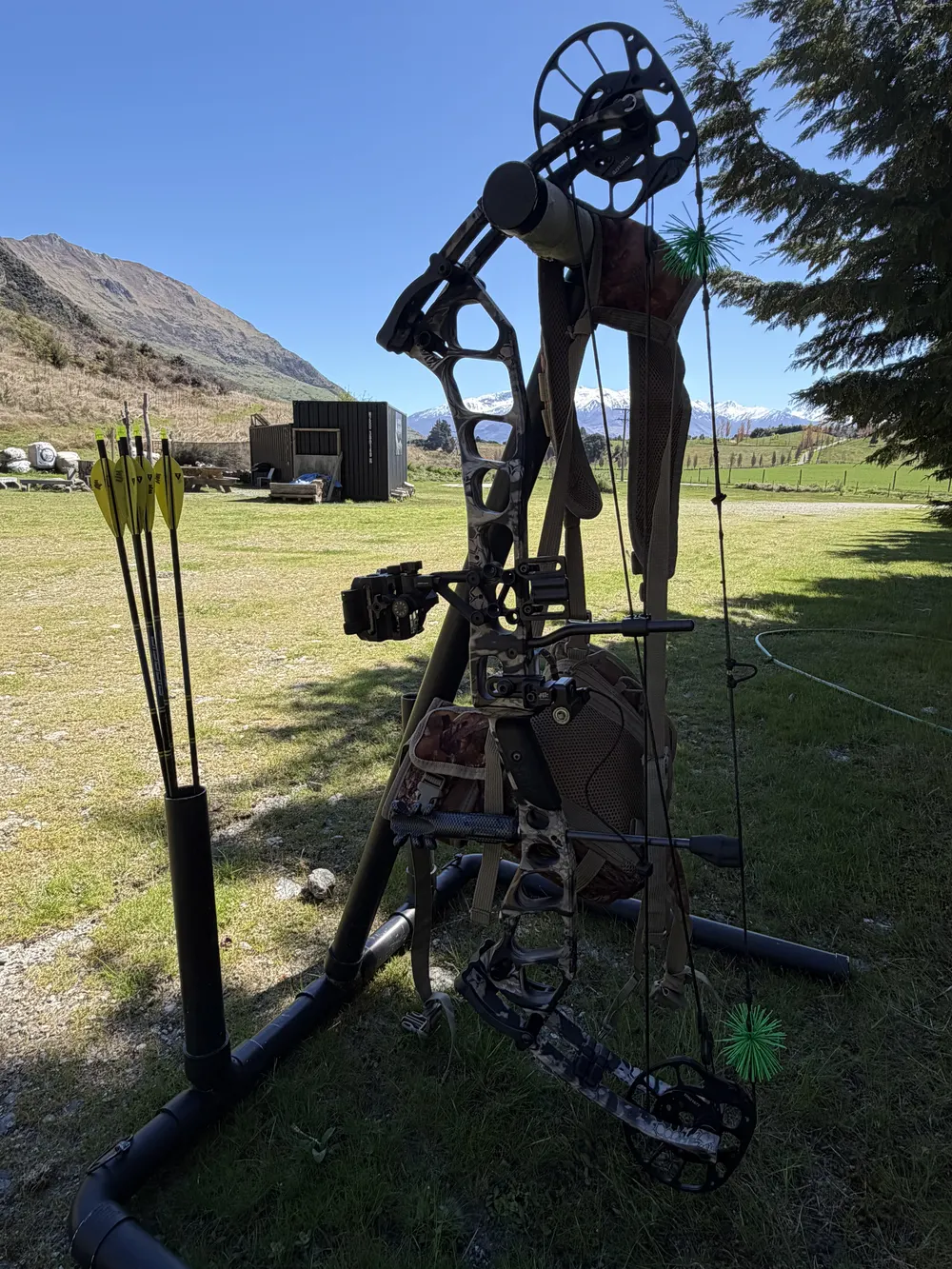
I made a lot of beginner mistakes in my first 547 days of bowhunting. Some I fixed at the range. Others I only found out on my first guided hunt in New Zealand, where I took one goat and missed or wounded several more. This post is the practical side: what I changed in my bow setup, what went wrong, and the gear I ended up with. If you want the full story, read my first bowhunt story.
What I changed in my bow setup
| What | Before | After |
|---|---|---|
| Draw weight | 45 lb, then 55 lb | 60, then 65, then 70 lb |
| Sight | A cheap five pin sight | Trophy Ridge React 5, five pin |
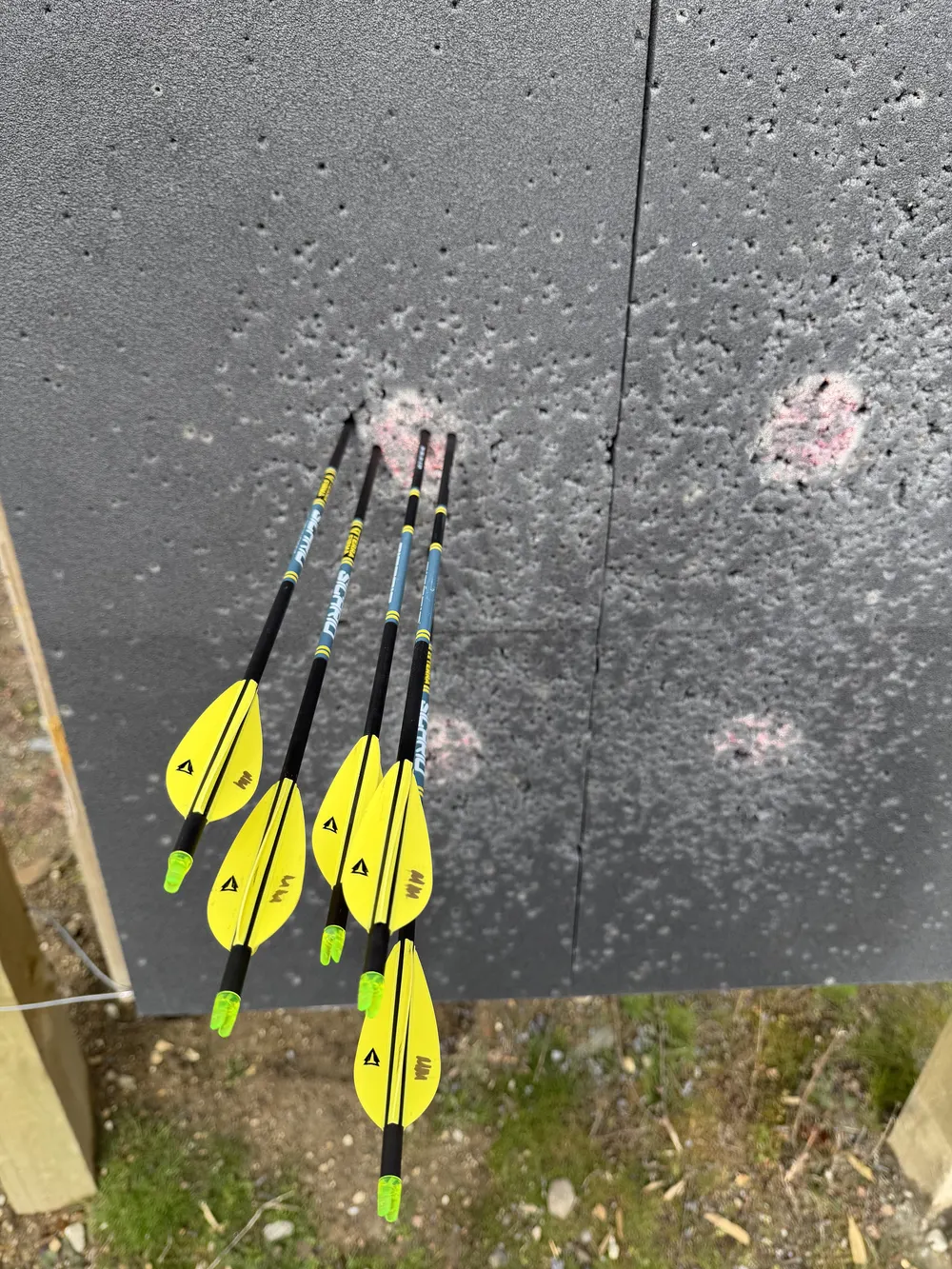
| Arrows | Victory VForce, then Easton Bowhunter 6.5 (slow and chunky) | Terra Firma Sicario, 300 grain. Staying with them long term |
| Bow tuning | Field points | Tuned to shoot broadheads only |
Draw weight
The first time I pulled my PSE Drive NXT it was set to 45 lb, and I thought that was too much. Mark helped me set it to 55 lb, and honestly I couldn't even pull it back. I spent a couple of good months working on my form, and only then went up to 60, then 65, then 70 lb. My advice is to start with a draw weight you can control, because you can always go up. Our draw weight guide covers legal minimums and what you actually need.
Arrows
My first arrows were a couple of dozen Victory VForce from Mark. I lost a lot of them, and plenty more got damaged or broken. They also flew funny and weren't accurate, and it took me months to realise it. Next I tried Easton Bowhunter 6.5 shafts, but I got rid of them because they are slow and chunky. I switched to Terra Firma Sicario, 300 grain, and I plan to stay with them for a long time. They are the best arrows I have ever shot, and the first ones I hunted effectively with.
Good to know: Arrow weight changes arrow speed and trajectory, which changes where your pins sit. Our arrow weight guide explains the trade-offs.
Sight
I started with a cheap five pin sight. I don't remember the brand. I later moved to a Trophy Ridge React 5, also a five pin. While I was investigating how arrow weight works, I built a sight tape, and members of the range started to notice when my shots got better.
Tuning for broadheads
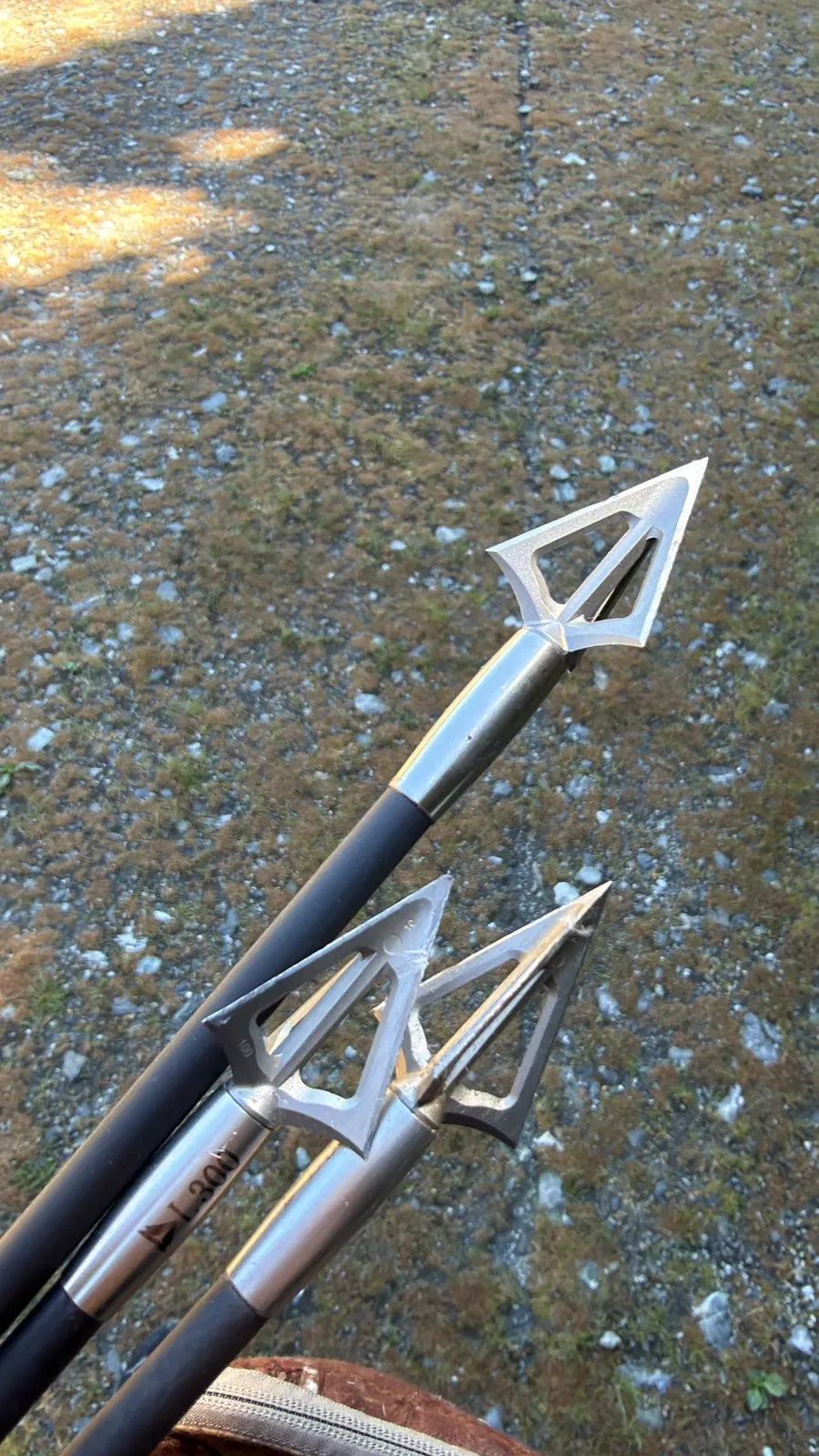
Broadheads and practice points behave differently in the air. There is drag to consider, and a lot of tuning, so I tuned my bow to shoot broadheads only. I practised with G5 Montec broadheads, and for the hunt Mark handed me a Terra Firma Venador two blade. Three days before the hunt I was still shooting a bag target with the G5. If your broadheads and field points land in different places, our broadhead tuning guide walks through the fix.
Beginner mistakes from my first guided hunt
I thought I was ready. These are the things that went wrong anyway, and what I would do differently.
- Check your zero at a short distance before you hunt. After a day of high shots, Mark had me shoot at 20 metres near the hut. It went high, and bringing my sight down three clicks fixed it. Our guide to verifying your sight tape shows how.
- Aim at a spot, not at the animal. On one shot I just framed the goat and didn't really aim. The arrow didn't go through, and the goat ran off with it still in him.
- Shoot the broadheads you will hunt with. I made a bad shot with the broadheads I'd been practising with, and I didn't know how they would penetrate until it counted.
- Wait for the animal to turn. My first shot was at a billy facing me from 25 metres, not quartered, and I missed. Mark's advice all day was to wait for the goat to quarter towards me. See our shot placement guide.
- Range every shot, including the quick follow-up. I took a second shot without ranging the goat properly, and the arrow went high again.
- Slow down when the adrenaline hits. I had trained for months and my breathing still broke when the goat appeared. The rangefinder, the pin and your breathing all come before the release.
- Test your rangefinder wet. My cheap Temu rangefinder got wet on an earlier trip, my breath fogged the lens, and the laser couldn't read. I couldn't make the shot.
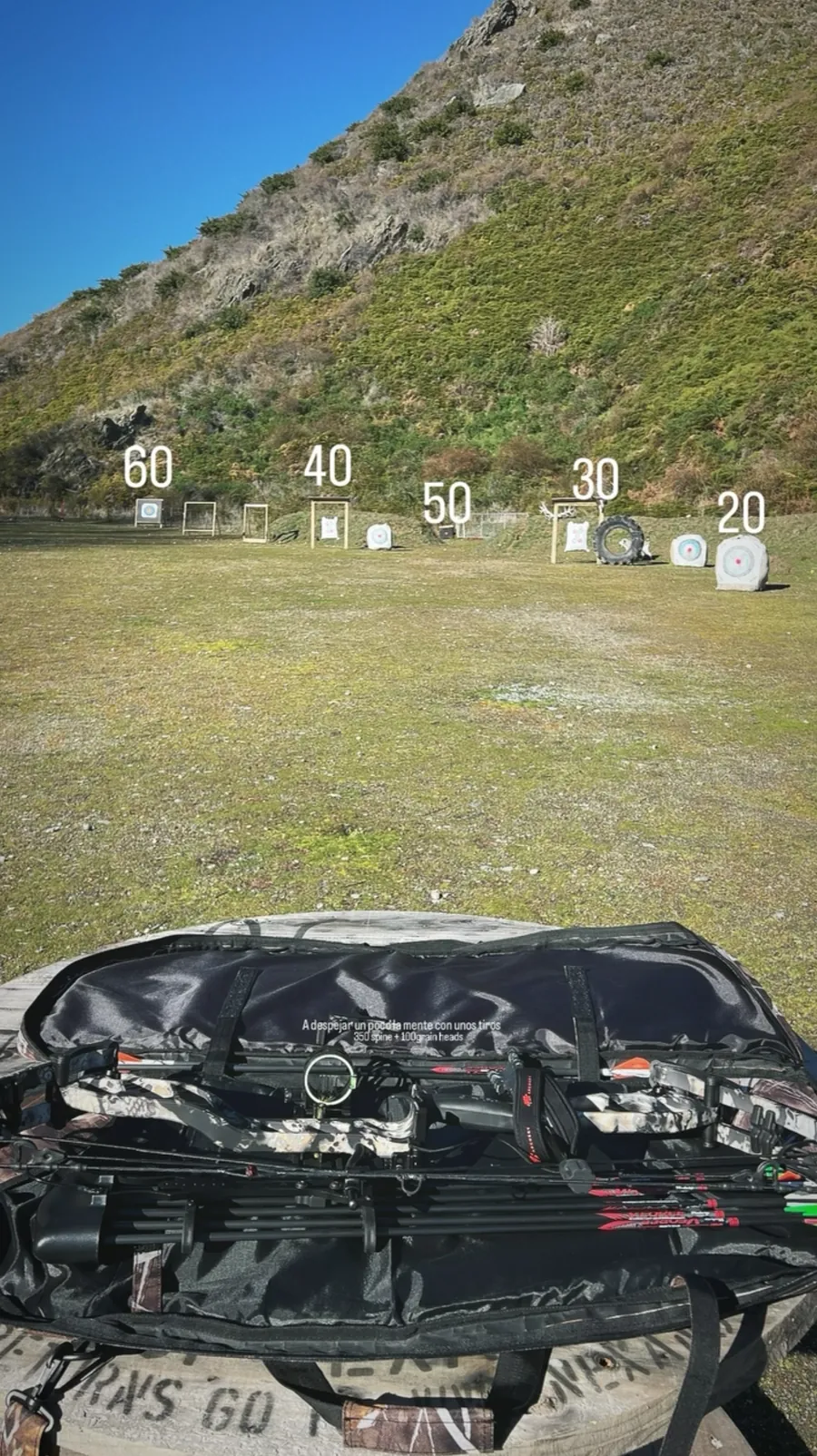
- Your range distance is not your hunting distance. When Bucky asked how far I could shoot, I said 50 metres at the range, and I was wrong.
- Plan for arrow recovery. Recovering the arrow is the first job after taking an animal with a bow, followed by the blood trail. Watching Mark do it showed me how much it matters.
Good to know: A steep angle changes the yardage you should dial. Our Shot Solver does the angle maths for you.
Gear I used
- Bow: PSE Drive NXT, Pro package, set to 70 lb
- Sight: Trophy Ridge React 5, five pin (30 metre pin used on the downhill shot)
- Arrows: Terra Firma Sicario, 300 grain, with 100 grain broadheads
- Broadheads: Terra Firma Venador two blade (from Mark, used on the hunt); G5 Montec (practice)
- Rangefinder: budget Temu rangefinder (fogged up in wet weather)
- Clothing: four layers, including a blue Penn fishing hoodie; Swazi hunting pants; a cheap green Mountain Warehouse waterproof jacket
- Pack: Thule 75 litre backpack, about 30 lb carried
- Boots: Lowa Ranger Evo GTX, wide fit
- Guide's backup: Mark's .223 rifle
Want the whole story behind these mistakes? Read my first bowhunt story. And if you're setting up your own bow, start with a sight tape for your real arrow speed, then read our beginner bow setup guide.